
How Long Does It Take to Sell a House in New Jersey?
If you’re wondering how long it takes to sell a house in New Jersey, the short answer is:
Most traditional home sales take between 60 and 120 days from listing to closing, while many cash sales can close in as little as 14 to 30 days.
The exact timeline depends on several factors, including your home’s condition, asking price, local market conditions, buyer financing, and the method you choose to sell.
Some homes receive multiple offers within a week, while others remain on the market for months. Even after accepting an offer, attorney review, inspections, mortgage approval, title work, and scheduling the closing can all affect how long it takes to complete the sale.
Understanding each stage of the process can help you set realistic expectations and choose the selling option that best fits your goals.
Average Timeline to Sell a House in New Jersey
Although every property is different, most traditional home sales follow a similar timeline.
| Stage | Typical Time |
|---|---|
| Preparing the home | 1–4 weeks |
| Listing the property | 1 day |
| Marketing and showings | 2–8 weeks |
| Accepting an offer | A few days to several weeks |
| Attorney review | Approximately 3–10 days |
| Home inspection | 1–2 weeks |
| Mortgage approval | 30–45 days |
| Closing | 1–2 weeks |
When combined, many traditional home sales take approximately two to four months, although every transaction is unique.
If you’re selling directly to a cash home buyer, several of these steps are simplified because there is no mortgage lender involved, allowing many transactions to close much faster.
Why Every Home Sells on a Different Timeline
One of the biggest misconceptions homeowners have is believing there’s a standard timeline that applies to every property.
There isn’t.
Selling a newly renovated home in a competitive neighborhood is very different from selling an inherited property that needs repairs or a rental occupied by tenants.
Several factors influence how quickly your home sells.
Asking Price
Pricing is often the single biggest factor affecting how long a property remains on the market.
Homes priced competitively typically receive more attention during the first few weeks of listing. Properties priced significantly above market value often stay on the market longer, resulting in price reductions and fewer qualified buyers.
The longer a property sits unsold, the more buyers begin wondering whether something is wrong with the home—even when nothing is.
Property Condition
Move-in-ready homes generally appeal to the largest number of buyers.
However, homes needing repairs can still sell successfully.
The difference is that traditional buyers often rely on mortgage financing, and lenders sometimes require repairs before approving the loan.
That’s one reason homes needing significant work may take longer to sell through the traditional market.
Location
Real estate markets vary throughout New Jersey.
A home in one town may receive multiple offers within days, while a similar property elsewhere may take considerably longer.
School districts, local inventory, buyer demand, and neighborhood desirability all influence selling timelines.
Even homes located only a few miles apart can experience very different market conditions.
Seasonality
Spring is traditionally considered the busiest home-selling season, followed closely by early summer.
Families often prefer moving before a new school year begins, creating increased buyer activity during these months.
That doesn’t mean homes don’t sell during fall or winter.
Well-priced homes continue selling throughout the year, although seasonal demand can influence how quickly offers are received.
Buyer Financing
One of the most common causes of delays has nothing to do with the property itself.
It has to do with the buyer’s mortgage.
After an offer is accepted, the lender typically requires income verification, underwriting, an appraisal, and final loan approval before closing can occur.
If additional documentation is requested—or the appraisal comes in lower than expected—the closing timeline can be extended.
This is one reason cash purchases often close much faster than financed transactions.
Understanding the Traditional Home Selling Timeline
Many homeowners focus on how quickly they can receive an offer.
In reality, accepting an offer is only the beginning of the closing process.
Here’s what usually happens after deciding to sell.
Step 1: Preparing the Property
Before listing, many homeowners spend time making repairs, decluttering, cleaning, landscaping, or staging the property.
Depending on the home’s condition, this stage alone may take anywhere from a few days to several weeks.
Some sellers invest in cosmetic improvements hoping to attract stronger offers, while others choose to sell the property in its current condition.
Step 2: Listing and Marketing
Once the home is listed, professional photography, online marketing, showings, and open houses begin attracting buyers.
The amount of time required to receive an acceptable offer depends largely on pricing, market demand, and competition from similar homes.
Some properties receive offers within days.
Others may remain on the market for several months.
Neither situation is unusual.
The right buyer and the right price must meet at the right time.
Step 3: Accepting an Offer
Receiving an offer is an exciting milestone, but it doesn’t mean your house has been sold.
After an offer is accepted, the transaction moves into several legal and financial stages before ownership officially transfers to the buyer. Many homeowners are surprised to learn that this portion of the process often takes longer than finding the buyer itself.
This is why it’s important to think about your timeline from listing to closing, not simply from listing to receiving an offer.
Step 4: Attorney Review
Unlike many states, attorney review plays an important role in most residential real estate transactions in New Jersey.
After a contract is signed, attorneys for both the buyer and seller have an opportunity to review the agreement, suggest modifications, and ensure their clients’ interests are protected.
While attorney review commonly lasts several days, negotiations over contract language or requested changes can extend the timeline.
Fortunately, most attorney review periods are completed without major delays when both parties communicate effectively.
Step 5: Home Inspection
Once attorney review has concluded, the buyer typically schedules a home inspection.
The inspection allows the buyer to better understand the condition of the property before completing the purchase.
Depending on the inspection results, the buyer may:
- Continue with the purchase as planned.
- Request repairs.
- Ask for a credit at closing.
- Renegotiate certain terms.
- Cancel the transaction if permitted under the contract.
Inspection negotiations are one of the most common reasons traditional home sales take longer than expected.
Step 6: Mortgage Approval and Appraisal
If the buyer is financing the purchase, the lender becomes heavily involved during this stage.
Most lenders require:
- A professional appraisal.
- Income verification.
- Employment verification.
- Credit review.
- Final underwriting approval.
If additional documentation is requested or the appraisal comes in below the agreed purchase price, closing may be delayed while both parties negotiate a solution.
This stage often takes 30 to 45 days, making it one of the longest portions of a traditional real estate transaction.
Step 7: Title Search and Closing
Before ownership can officially transfer, the title company performs a title search to confirm there are no legal issues affecting the property.
The title search helps identify matters such as:
- Existing liens
- Outstanding mortgages
- Judgments
- Ownership disputes
- Easements
- Recording errors
If problems are discovered, they typically need to be resolved before closing can proceed.
Once the title has been cleared and all required documents have been completed, the closing is scheduled and ownership transfers to the buyer.
For many homeowners, reaching this point marks the end of a process that began several months earlier.
How Long Does It Take to Sell to a Cash Home Buyer?
While a traditional home sale often takes two to four months, selling directly to a cash home buyer can significantly reduce the overall timeline.
The primary reason is simple:
There is no mortgage lender involved.
Without waiting for financing approval, underwriting, or lender-required appraisals, many of the most time-consuming steps are removed from the transaction.
A typical cash sale often follows this timeline:
| Stage | Typical Time |
|---|---|
| Initial contact | 1–2 days |
| Property evaluation | 2–5 days |
| Cash offer | Within a few days |
| Title work | 1–3 weeks |
| Closing | Often 14–30 days |
Every situation is different, but many homeowners choose a cash sale because it provides greater certainty and flexibility.
In many cases, sellers can also choose a closing date that works best for their schedule rather than waiting for a lender’s timeline.
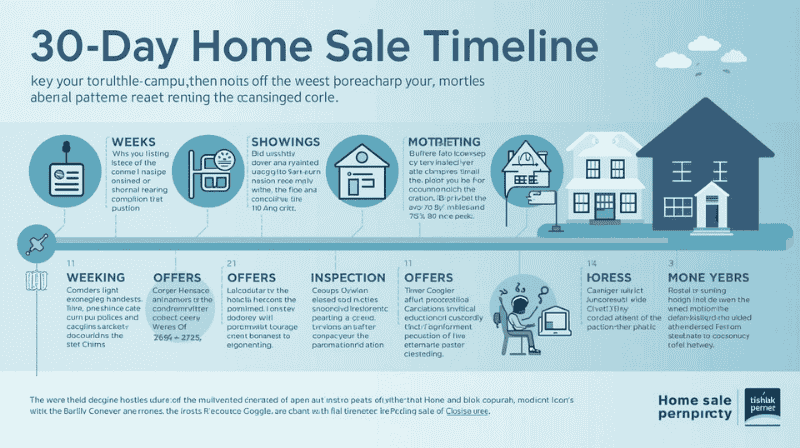
Can You Really Sell a House in 30 Days?
Yes—but the answer depends on how you sell.
Selling through a real estate agent while the buyer obtains mortgage financing can certainly close within 30 days, but it’s less common because several independent parties must complete their responsibilities before closing.
Selling directly to a cash home buyer generally makes a 30-day timeline much more realistic because financing-related delays have been removed.
However, even cash sales are not guaranteed to close within a specific number of days.
Factors such as title issues, probate matters, outstanding liens, or the seller’s preferred closing date can still affect the timeline.
The important takeaway is that a cash sale often provides greater control over the closing schedule rather than guaranteeing an exact number of days.
What Can Delay the Sale of a House?
Even well-planned real estate transactions sometimes encounter unexpected delays.
Some of the most common include:
Outstanding liens, ownership disputes, or recording errors must often be resolved before closing.
Inherited properties may require additional legal steps before ownership can transfer.
Buyer Financing
Mortgage underwriting, appraisal issues, or changes in the buyer’s financial situation can delay closing.
Requests for repairs or credits may require additional negotiations before both parties reach an agreement.
Depending on the municipality, certain inspections, certificates, or local requirements may need to be completed before closing.
While many of these issues are manageable, identifying them early often helps keep the transaction moving forward.
Traditional Sale vs. Cash Sale Timeline
Both selling methods have advantages depending on your goals.
| Traditional Sale | Cash Sale |
|---|---|
| Typically 60–120 days | Often 14–30 days |
| Buyer financing required | No mortgage financing |
| Home inspection common | Often purchased as-is |
| Appraisal usually required | Often no lender appraisal |
| Multiple showings | Limited or no showings |
| Repairs may be negotiated | Homes frequently purchased in current condition |
Neither approach is automatically better.
If maximizing your sale price is your highest priority and you’re comfortable waiting longer, listing with a real estate agent may be the right choice.
If your priority is certainty, convenience, or selling quickly without making repairs, a cash sale may better fit your situation.
Need to Sell My House Fast in New Jersey?
If you’re looking for a faster, simpler way to sell your home, Garden State Cash Homes can help. We buy houses in any condition and can often close on your timeline.