
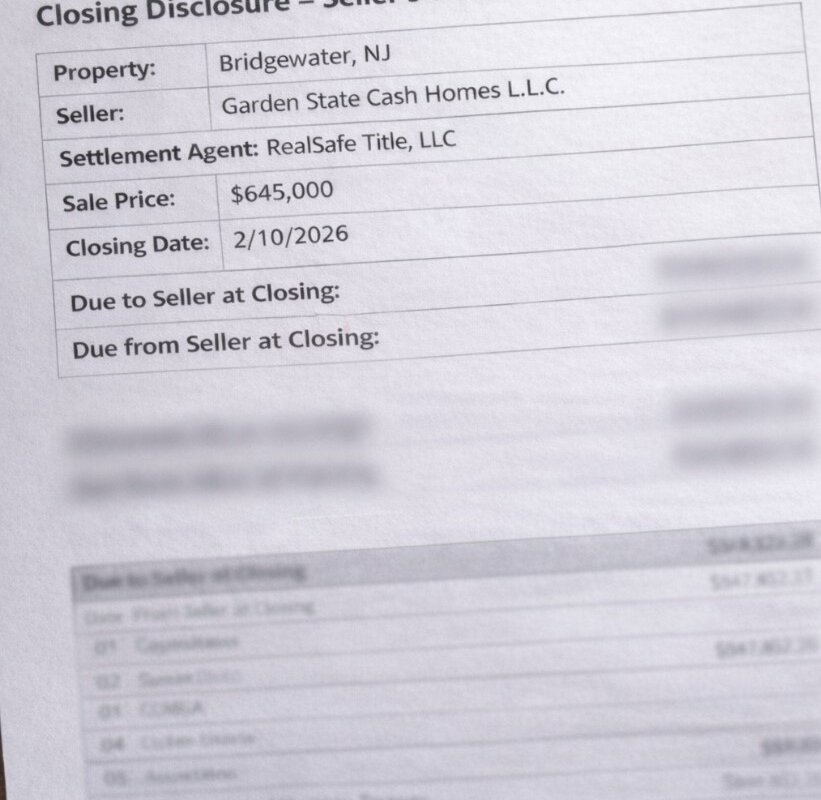
New Jersey Is a Title + Attorney State — Here’s How Closing Works
If you are selling a house in New Jersey, you will likely hear both a title company and a real estate attorney mentioned during the process. That’s because New Jersey is a title + attorney state, meaning both are commonly involved in a real estate transaction and each handles different parts of the closing process.
Understanding what each one does can help you avoid delays and know what to expect when selling a house in New Jersey.
What Is a Title Company?
A title company is a third party that helps make sure a property can legally be transferred from the seller to the buyer. They research the property’s ownership history, check for liens or claims, provide title insurance, and handle the money and paperwork at closing.
In simple terms, the title company makes sure:
- The property legally belongs to the seller
- There are no major ownership issues
- Any existing mortgages or liens are paid off
- The deed is properly transferred and recorded
- The seller receives their money after closing
What Does a Title Search Do?
A title search is one of the most important steps before closing. The title company researches public records to confirm the legal ownership of the property and to identify any issues that must be resolved before the property can be sold.
A title search may uncover:
- Mortgage liens
- Tax liens
- Judgments
- Open permits
- Code violations
- Ownership disputes
- Easements or boundary issues
- Probate or estate issues
If any of these issues are found, they usually must be resolved before closing can happen.
Title Insurance (Very Important)
Title insurance protects the buyer (and sometimes the lender) in case a title issue appears after closing that was not discovered during the title search.
For example, title insurance can protect against:
- Unknown liens
- Errors in public records
- Unknown heirs claiming ownership
- Fraud or forged documents
- Filing errors
In most New Jersey real estate transactions, title insurance is issued at closing and is a one-time cost.
Who Chooses the Title Company in New Jersey?
In many New Jersey real estate transactions, the buyer typically chooses the title company, especially if the buyer is using a mortgage lender.
However, in some transactions — especially cash sales — the title company may be chosen by agreement between the buyer and seller.
Who Pays Title Fees in New Jersey?
Closing costs vary depending on the transaction, but in many New Jersey sales:
Seller may pay:
- Realty transfer tax
- Attorney fee (if they hire one)
- Mortgage payoff
- Municipal fees
- Some title-related fees depending on the contract
Buyer may pay:
- Title insurance
- Lender title policy (if financing)
- Title company closing/service fees
- Recording fees
Every transaction is different, so closing costs should always be reviewed before closing day.
You can learn more here:
What Happens at Closing in New Jersey
What the Title Company Does at Closing
At closing, the title company plays a major role in finalizing the transaction. They typically:
- Prepare the closing statement
- Collect money from the buyer or lender
- Pay off the seller’s mortgage
- Pay closing costs and fees
- Issue title insurance
- Record the new deed with the county
- Send the seller their proceeds
In New Jersey, sellers are typically paid by wire transfer after closing is completed.
How Title Companies Work With Attorneys in New Jersey
Because New Jersey is a title + attorney state, both the title company and attorneys are often involved.
Attorney handles:
- Contract review
- Attorney review period
- Legal advice
- Negotiations
- Legal issues (liens, probate, foreclosure, etc.)
Title company handles:
- Title search
- Title insurance
- Closing documents
- Money and escrow
- Recording the deed
- Final closing
Both work together to make sure the transaction closes properly and legally.
You can learn more here:
NJ Real Estate Attorney Process
What Can a Title Company Do for You If You Do Not Use an Attorney?
In some New Jersey transactions — especially cash sales — a transaction may be handled primarily through a title company without each party hiring their own attorney.
If no attorney is involved, the title company may still:
- Perform the title search
- Issue title insurance
- Prepare the closing statement
- Coordinate the closing
- Hold and distribute funds
- Pay off the mortgage
- Record the deed
- Handle settlement paperwork
However, it is important to understand that a title company does not represent you legally and cannot give legal advice. They act as a neutral third party to process the transaction.
Some sellers still choose to hire an attorney if the situation involves:
- Probate
- Foreclosure
- Liens
- Divorce
- Title disputes
- Complex legal issues
Common Title Issues in New Jersey
Some of the most common title issues that can delay closing include:
- Mortgage liens
- Tax liens
- Judgments
- Open permits
- Code violations
- Probate or estate issues
- Boundary disputes
- Ownership issues
- HOA liens
- Unpaid municipal charges
These issues usually must be resolved before closing can happen.
FAQ – Title Companies in New Jersey
What does a title company do in New Jersey?
A title company performs the title search, issues title insurance, prepares closing documents, handles the money, and records the deed.
Do I need a title company to sell a house in NJ?
In most real estate transactions, a title company is involved to handle the title search, title insurance, and closing.
Who picks the title company in NJ?
Often the buyer chooses the title company, but this can vary depending on the agreement.
Who pays for title insurance in NJ?
In many transactions, the buyer pays for title insurance, but this can be negotiated in the contract.
Can you close without an attorney in New Jersey?
Some cash transactions close through a title company without each party hiring an attorney, but attorneys are still commonly used in NJ.
What can delay closing?
Title issues, liens, open permits, code violations, CO/CCO inspection issues, home inspection issues, and financing problems are common causes of closing delays.
Disclaimer
This content is for informational purposes only and does not constitute legal advice. Real estate laws and closing procedures in New Jersey can vary depending on the situation. Buyers and sellers should consult with a qualified real estate attorney or title professional regarding their specific transaction.
